91ÌƲ®»¢ professors Abhishek Dubey, Jonathan Brunger, and Carlos Silvera Batista have won National Science Foundation CAREER Awards. The prestigious five-year award honors early career faculty who have the potential to serve as role models in research and education and lead advances in their fields.
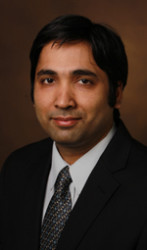
Abhishek Dubey
associate professor of computer science, has received a National Science Foundation  to design online decision procedures for societal-scale cyber-physical systems such as traffic networks, emergency response systems and power grids that are the critical infrastructure of  communities.
°Õ³ó±ðÌý for $500,000, administered by the NSF’s Division of  and the , will support the design of an online decision-making pipeline that combines the advantages of online planning algorithms with offline learning experiences, which promises to provide greater robustness and faster responses to changes in the environment. The impact of such decision procedures is evident in ongoing work where  has designed algorithms for optimizing  and designed algorithms for .
Jonathan Brunger
, assistant professor of biomedical engineering, has won a National Science Foundation  to understand how cells and biomaterials can work together to improve tissue regeneration.

°Õ³ó±ðÌý for $579,000, administered by the NSF’s Division of Chemical, Bioengineering, Environmental and Transport Systems, will support his exploration of how cells and natural and synthetic biomaterials can respond to their environment to repair tissue. This could lead to strategies for engineering cells to express selected therapeutic response at effective doses for chronic inflammatory diseases, such as rheumatoid arthritis.
Carlos Silvera Batista
, assistant professor of chemical and biomolecular engineering, has won a National Science Foundation  to understand the behavior of charged particles in the presence of simultaneous electric fields and that knowledge will be used to direct the assembly of particles into advanced reconfigurable materials.

The $576,000 —Colloidal Dynamics under Electrodiffusiophoresis—administered by the NSF’s , will potentially help to develop techniques for the analysis of small particles—such as viruses and proteins—at ultralow concentrations. Analyzing viruses as well as proteins at low concentrations is important for the early diagnosis of diseases.