Female candidates have to be more qualified than their male opponents to prevail in an election because many people donā€™t see women as leaders, according to research that reveals hidden bias that can emerge in the voting booth.
ā€œMy study yielded an intriguing finding,ā€ said , assistant professor of political science at 91ĢĘ²®»¢ University. ā€œIn following instructions to sort images rapidly, the mind often balked at accepting a woman as a leader.
ā€œThe average person found it easier to pair words like ā€˜presidentā€™ and ā€˜executiveā€™ with male names and pictures and words like ā€˜assistantā€™ and ā€˜aideā€™ with female names.ā€
Measuring subconscious biases
Mo used the ā€“ or IAT. The test measures how people feel deep in their subconscious about issues including race, age and sex.
ā€œThe IAT is an experimental method designed to measure the strengths of associations linking social categories, like blacks versus whites, to evaluative anchors, like good versus bad,ā€ Mo said. ā€œSo I tailored the measures to pick up sexism with respect to political leadership and looked at whether it affected voter choice.ā€
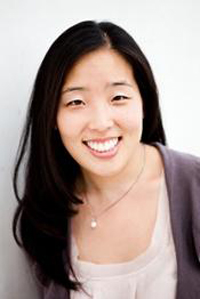
Mo surveyed 407 study participants in Florida, which was chosen because at the time the data was collected, roughly the same percentage of women held elective office in the state (23 percent) as women held elective office in the nation overall (24 percent).
Once she had the test subjectsā€™ biases in hand, Mo asked them how they would vote in two-person races in various scenarios.
ā€œThe more difficulty a person had in classifying a woman as a leader, the less likely the person was to vote for a woman,ā€ Mo said. ā€œEven when I consider only those who explicitly say that they would support a female candidate, I found that if they have difficulty associating women with leadership attributes, they are less likely to vote for a woman in a noticeable way.ā€
Female role models
The results werenā€™t all bad for women candidates, however.
ā€œPeople are at this level because they havenā€™t seen a lot of female leaders,ā€ Mo said. ā€œWhatā€™s amazing is that many individuals, when they were given information about qualification differences, did choose the woman.
ā€œPeople can overcome these unconscious tendencies to see only males as leaders.ā€
Leveling the playing field
Elections can be made more equitable by providing voters with more opportunities to learn about candidates, Mo said. Ballots with information beyond name and party affiliation, debates and other education efforts can help override the role that gender plays in an election.
Additionally, people are more likely to override their unconscious biases if they are aware that they have them.
Moā€™s paper, is published in the June issue of
Media contact:
Amy Wolf, (615) 294-4021 (cell)